
Uttar Pradesh is one of India’s largest sugar-producing states, home to hundreds of sugar mills that play a vital role in the state’s economy. As sugar manufacturing continues to become more energy-conscious and efficiency-driven, heat exchangers have become an essential part of modern sugar mill operations. From juice heating and evaporation to condensate recovery and process cooling, heat exchangers help sugar mills optimize energy usage, reduce operating costs, and maintain consistent production quality.
At SS PHE India, we work closely with industrial clients across Uttar Pradesh and understand the critical role that efficient heat transfer equipment plays in sugar processing plants. Choosing the right heat exchanger can significantly improve plant performance while reducing energy consumption and maintenance requirements.
Why Heat Exchangers Are Important in Sugar Mills
Sugar production involves multiple heating and cooling stages. During the manufacturing process, raw sugarcane juice must be heated, clarified, evaporated, crystallized, and cooled before the final product is obtained. These operations require precise temperature control and efficient heat recovery systems.
Heat exchangers help transfer heat from one process stream to another without mixing the fluids. This allows sugar mills to reuse thermal energy, reduce steam consumption, improve process efficiency, and lower overall production costs.
Common Applications of Heat Exchangers in Sugar Mills
Juice Heating
Freshly extracted sugarcane juice requires heating before clarification. Heat exchangers are used to raise the temperature of the juice efficiently while maintaining product quality and minimizing energy losses.
Evaporation Systems
Evaporators are among the largest energy consumers in a sugar mill. Heat exchangers assist in recovering and reusing heat from different stages of the evaporation process, helping reduce steam demand and improve overall plant efficiency.
Condensate Recovery
Recovering condensate from process steam is essential for reducing water and energy consumption. Heat exchangers help transfer the recovered heat back into the process, making operations more sustainable and cost-effective.
Cooling Applications
Various process fluids, oils, and equipment require cooling during sugar production. Heat exchangers ensure that operating temperatures remain within safe limits, protecting equipment and maintaining production reliability.
Vacuum Pan and Crystallization Processes
Accurate temperature control is crucial during crystallization. Heat exchangers help maintain stable operating conditions, resulting in improved sugar quality and higher production efficiency.
Types of Heat Exchangers Used in Sugar Mills
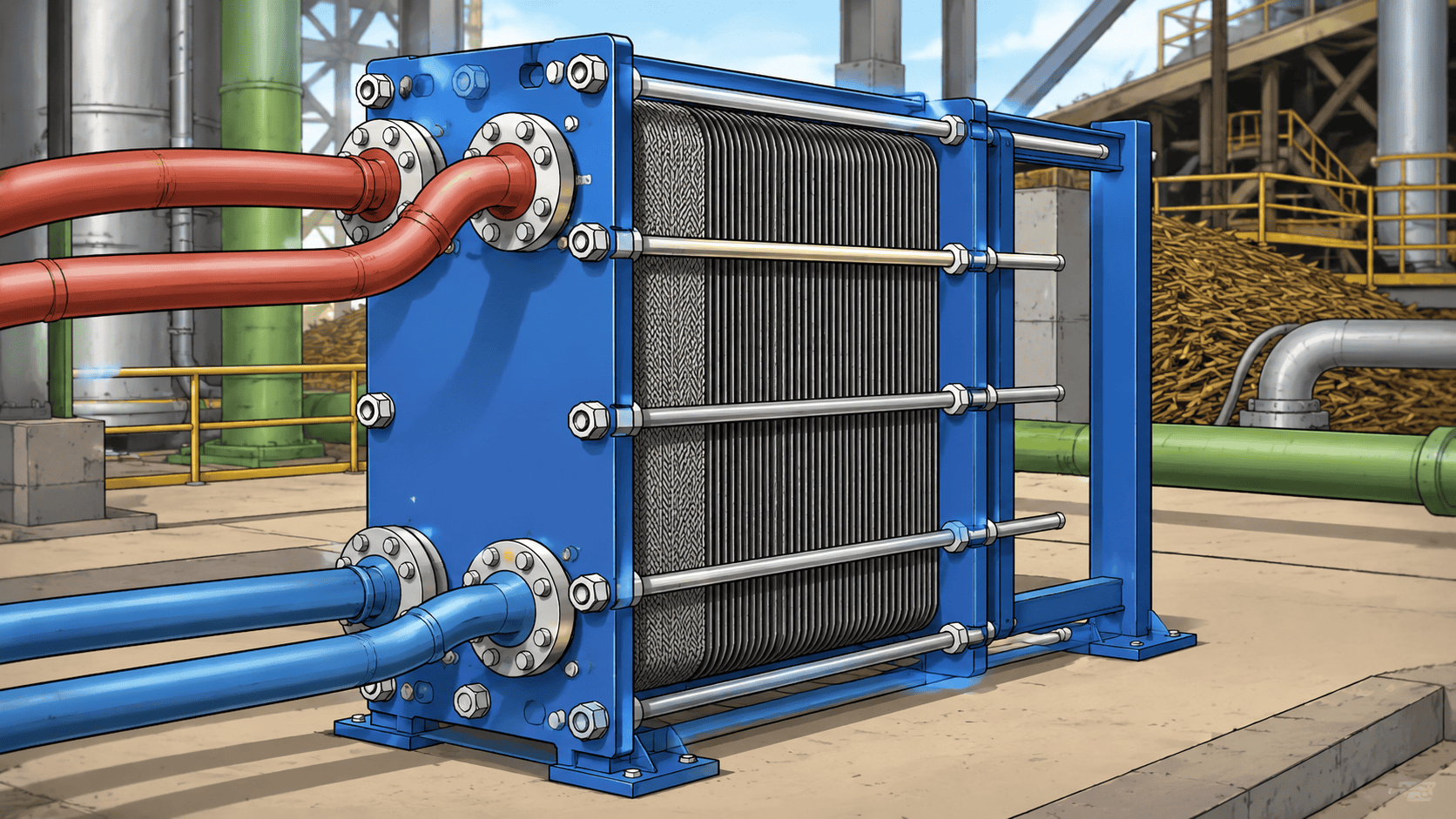
Plate Heat Exchangers
Plate Heat Exchangers are widely used in sugar processing because of their compact design, high heat transfer efficiency, and ease of maintenance. They are particularly effective for juice heating, condensate recovery, and process cooling applications.
Shell and Tube Heat Exchangers
Known for their durability and ability to handle high pressures and temperatures, Shell and Tube Heat Exchangers are commonly used in demanding process applications throughout sugar manufacturing plants.
Brazed Plate Heat Exchangers
These compact units are ideal for auxiliary cooling systems and smaller process requirements where space savings and thermal efficiency are important considerations.
Fully Welded and Semi-Welded Heat Exchangers
For applications involving aggressive fluids or challenging operating conditions, welded heat exchangers offer enhanced reliability and longer service life.
Benefits of Using High-Quality Heat Exchangers in Sugar Mills
- Improved energy efficiency and reduced steam consumption
- Lower operating and maintenance costs
- Enhanced process reliability and production consistency
- Better heat recovery and resource utilization
- Reduced environmental impact
- Longer equipment life and reduced downtime
Choosing the Right Heat Exchanger for Your Sugar Mill
Every sugar mill operates under different conditions, making heat exchanger selection a critical decision. Factors such as process temperatures, flow rates, pressure requirements, fluid characteristics, and maintenance considerations must all be evaluated carefully.
Common options include:
- Gasketed Plate Heat Exchangers
- Brazed Plate Heat Exchangers
- Semi-Welded Heat Exchangers
- Fully Welded Heat Exchangers
- Shell and Tube Heat Exchangers
Working with an experienced heat exchanger supplier ensures that the equipment is properly designed for the application and delivers maximum performance throughout its operating life.
SS PHE India: Supporting Sugar Mills Across Uttar Pradesh
At SS PHE India, we supply and service a wide range of heat exchangers, including Plate Heat Exchangers, Shell and Tube Heat Exchangers, Brazed Plate Heat Exchangers, Semi-Welded Heat Exchangers, Fully Welded Heat Exchangers, and PHE spare parts. Based in Uttar Pradesh, we work with industries across the state to provide reliable, energy-efficient, and cost-effective heat transfer solutions.
Whether you are planning a new installation, upgrading an existing system, or looking to improve the performance of your current equipment, our team can help identify the most suitable solution for your sugar processing requirements.
Conclusion
Heat exchangers are a key component in modern sugar manufacturing, helping mills improve efficiency, reduce energy consumption, and maintain consistent production quality. As sugar mills in Uttar Pradesh continue to modernize and optimize their operations, investing in the right heat exchanger technology can deliver significant long-term benefits.
By selecting high-quality heat transfer equipment and partnering with experienced industry specialists, sugar mills can achieve better performance, lower operating costs, and greater sustainability for years to come.