
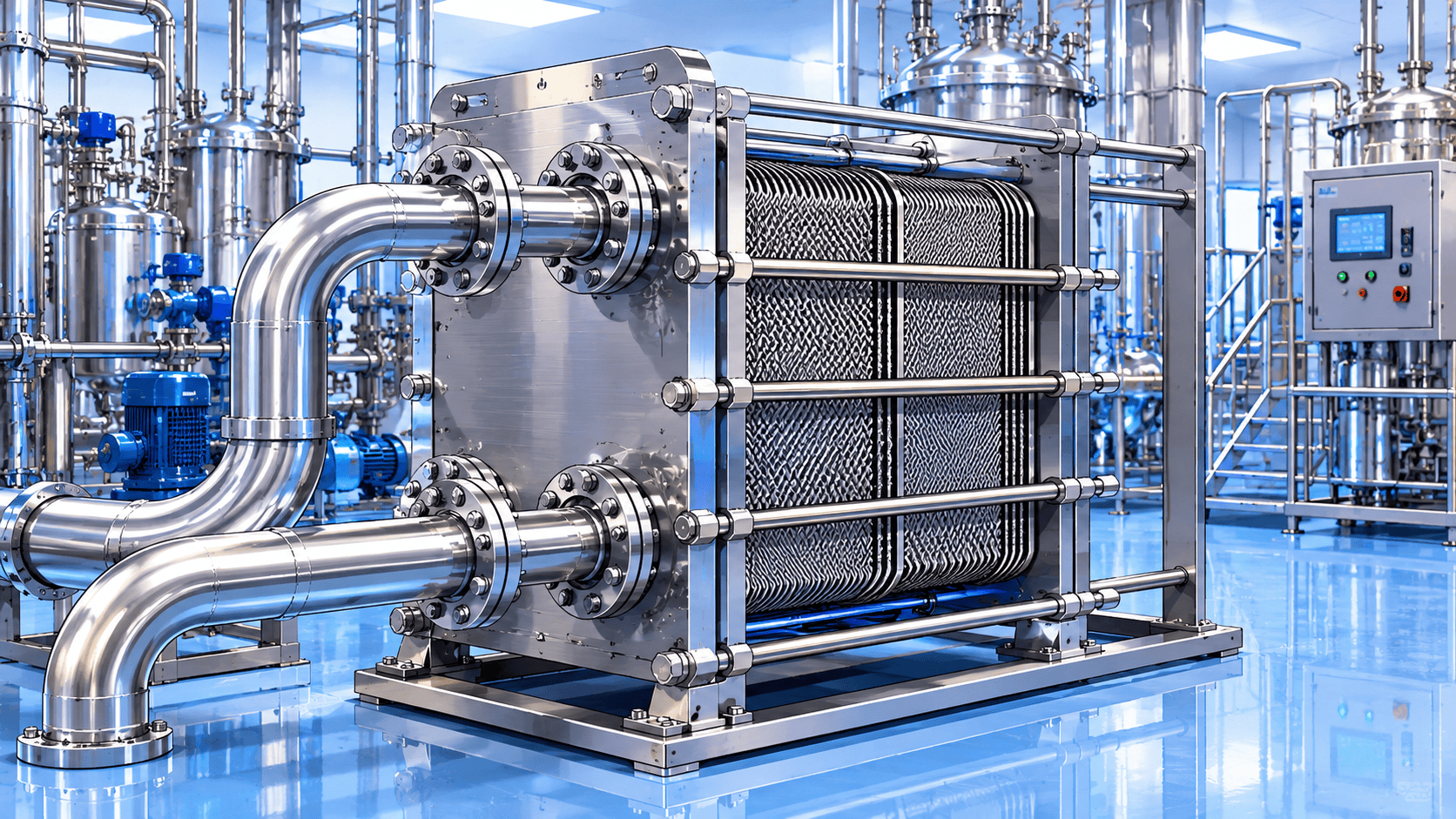
The pharmaceutical industry is built on precision. Every stage of the manufacturing process—from producing active pharmaceutical ingredients (APIs) to formulating, sterilizing, and packaging medicines—requires strict control of temperature and operating conditions. Even minor temperature variations can affect product quality, process efficiency, and regulatory compliance.
This is where heat exchangers play a crucial role.
Although they often operate behind the scenes, heat exchangers are among the most important pieces of equipment in pharmaceutical manufacturing facilities. They help maintain precise temperatures, improve energy efficiency, support sterile operations, and ensure that critical processes run smoothly and consistently.
At SS PHE India, we work with industries that demand high levels of performance and reliability, and few sectors have stricter requirements than pharmaceuticals. Understanding the role of heat exchangers can help manufacturers optimize production, reduce operating costs, and maintain the highest quality standards.
Why Temperature Control Matters in Pharmaceutical Manufacturing
Pharmaceutical production involves a wide range of temperature-sensitive processes. Whether it’s chemical synthesis, fermentation, purification, sterilization, or cooling, maintaining the correct temperature is essential for achieving the desired product characteristics.
Improper temperature control can lead to:
- Reduced product quality
- Lower process efficiency
- Increased energy consumption
- Batch inconsistencies
- Equipment damage
- Regulatory compliance issues
Heat exchangers provide an efficient way to transfer heat between process fluids without allowing them to mix, ensuring precise temperature management throughout the production cycle.
Key Applications of Heat Exchangers in Pharmaceutical Plants
Process Heating
Many pharmaceutical manufacturing processes require controlled heating to facilitate chemical reactions, dissolve ingredients, or prepare raw materials for further processing.
Heat exchangers provide uniform and controlled heating, helping manufacturers maintain consistent product quality while improving process efficiency.
Process Cooling
Cooling is equally important in pharmaceutical production. Certain reactions generate heat that must be removed quickly to prevent degradation of sensitive compounds.
Heat exchangers help maintain optimal operating temperatures, ensuring stable reaction conditions and protecting valuable products from thermal damage.
Purified Water Systems
Water is one of the most widely used utilities in pharmaceutical manufacturing. Systems producing Purified Water (PW) and Water for Injection (WFI) require precise temperature control to prevent microbial growth and maintain compliance with strict industry standards.
Heat exchangers are commonly used to heat, cool, and maintain the required temperatures within these critical water systems.
Fermentation Processes
Many pharmaceutical products, including antibiotics, vaccines, enzymes, and biotechnology-based medicines, are produced through fermentation.
During fermentation, microorganisms generate heat as they grow and multiply. Efficient cooling is necessary to maintain ideal biological conditions. Heat exchangers help remove excess heat and support stable fermentation performance.
Sterilization and Clean Steam Systems
Sterility is one of the most important requirements in pharmaceutical manufacturing. Heat exchangers play a key role in generating clean steam, sterilizing equipment, and supporting Clean-in-Place (CIP) and Sterilize-in-Place (SIP) systems.
By ensuring accurate temperature control, they help manufacturers meet strict hygiene and regulatory requirements.
Solvent Recovery
Many pharmaceutical facilities use solvents during production. Recovering and reusing these solvents can significantly reduce operating costs and improve sustainability.
Heat exchangers are used in solvent recovery systems to condense vapors and improve overall energy efficiency within the plant.
Types of Heat Exchangers Used in Pharmaceutical Manufacturing
Plate Heat Exchangers
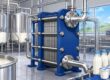
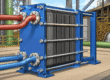
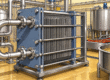
Plate Heat Exchangers are widely used in pharmaceutical applications because of their compact design, high heat transfer efficiency, and ease of cleaning.
Their hygienic construction makes them suitable for purified water systems, process cooling, product heating, and CIP applications.
Shell and Tube Heat Exchangers
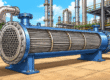
Shell and Tube Heat Exchangers are often used in applications involving higher pressures, temperatures, or larger process capacities.
Their robust construction makes them ideal for utility systems, condensers, solvent recovery units, and process heating applications.
Brazed Plate Heat Exchangers
These compact heat exchangers are commonly used in HVAC systems, chillers, refrigeration units, and auxiliary cooling systems within pharmaceutical facilities.
Fully Welded and Semi-Welded Heat Exchangers
For applications involving aggressive chemicals or challenging operating conditions, welded heat exchangers provide enhanced durability, reliability, and chemical resistance.
Benefits of Heat Exchangers in Pharmaceutical Manufacturing
Consistent Product Quality
Accurate temperature control helps maintain product consistency and ensures that manufacturing processes meet strict quality standards.
Improved Energy Efficiency
Modern heat exchangers allow facilities to recover and reuse heat from various processes, reducing energy consumption and lowering operating costs.
Regulatory Compliance
Pharmaceutical manufacturers must comply with strict regulations related to product quality, hygiene, and process control. Properly designed heat exchangers help support compliance with GMP and other industry standards.
Reduced Operating Costs
Efficient heat transfer reduces utility consumption, improves equipment performance, and lowers maintenance requirements.
Enhanced Process Reliability
Reliable heat exchangers help minimize downtime and ensure uninterrupted production, which is critical in pharmaceutical manufacturing environments.
Better Sustainability
As pharmaceutical companies continue to focus on sustainability, heat recovery and energy-efficient equipment play an increasingly important role in reducing environmental impact.
Factors to Consider When Selecting a Pharmaceutical Heat Exchanger
Choosing the right heat exchanger requires careful evaluation of several factors, including:
- Product sensitivity
- Temperature requirements
- Pressure conditions
- Cleanability and hygiene standards
- Material compatibility
- Regulatory compliance
- Maintenance requirements
- Energy efficiency goals
Because pharmaceutical processes are highly specialized, heat exchangers should be designed and selected based on the specific application rather than using a one-size-fits-all approach.
How SS PHE India Supports the Pharmaceutical Industry
At SS PHE India, we supply and service a wide range of heat exchanger solutions designed to meet the demanding requirements of pharmaceutical manufacturing facilities. Our offerings include Plate Heat Exchangers, Shell and Tube Heat Exchangers, Brazed Plate Heat Exchangers, Fully Welded Heat Exchangers, Semi-Welded Heat Exchangers, as well as PHE gaskets, plates, and spare parts.
Our team works closely with customers to understand their process requirements and recommend solutions that improve efficiency, reliability, and long-term performance.
Conclusion
Heat exchangers may not always be the most visible equipment in a pharmaceutical facility, but their impact is significant. From maintaining precise process temperatures and supporting sterile operations to improving energy efficiency and product quality, they play a vital role in modern pharmaceutical manufacturing.
As the pharmaceutical industry continues to evolve and demand greater efficiency, reliability, and compliance, investing in the right heat exchanger technology becomes increasingly important. By choosing high-quality heat transfer solutions and working with experienced partners such as SS PHE India, manufacturers can build more efficient, reliable, and future-ready production facilities.